
Traditionally, coaches, scouts, and analysts had the job of breaking down games—studying every play and every player movement to guide their decisions. While useful, this process was often slow, subjective, and limited by how much a person could see or interpret.
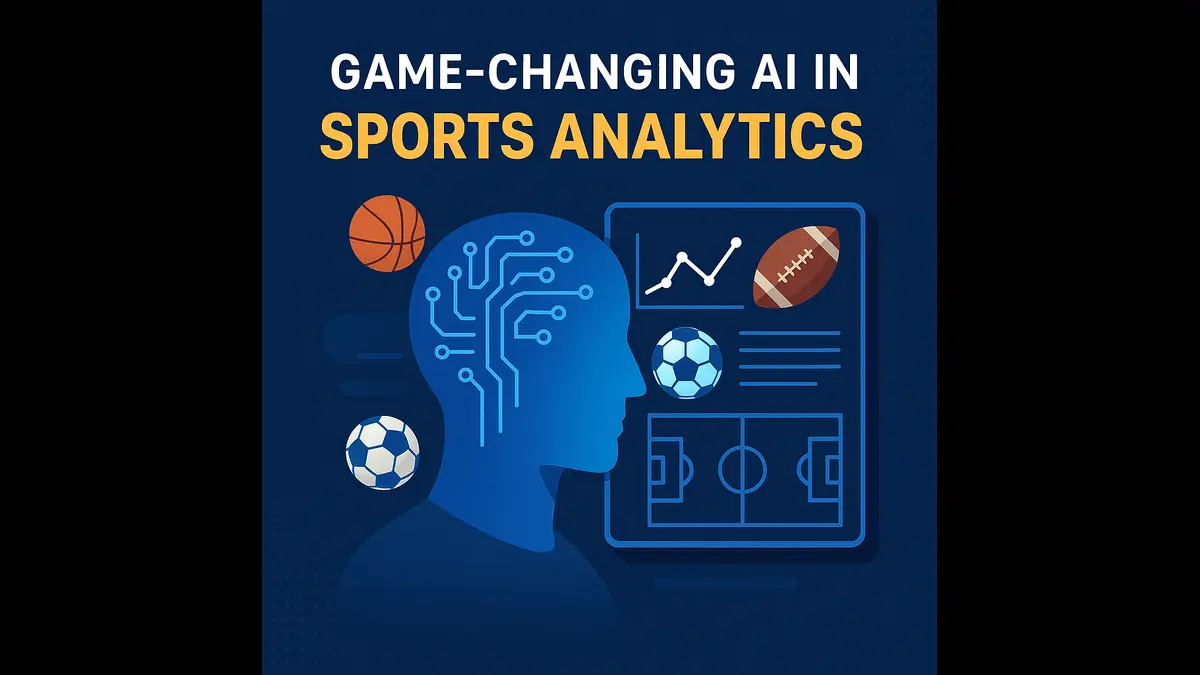
Now, AI in sports analytics is adding a new layer to the picture. By using tools like machine learning, computer vision, and predictive models, AI can process huge amounts of data quickly and highlight patterns that might otherwise be missed. From spotting early signs of injury risk to helping teams scout new talent or giving fans fresh insights during a match, AI is becoming a practical part of how sports are played, coached, and enjoyed.
In this article, we’ll look at how AI is being used in sports analytics today, the benefits it brings, the challenges it still faces, and what the future could look like.
Table of Contents
What Is AI in Sports Analytics?
Sports analytics refers to the use of data and statistical methods to evaluate player and team performance. For decades, this involved traditional statistics such as batting averages, shooting percentages, or yards gained.
AI in sports analytics goes several steps further. Instead of just crunching numbers, AI can:
- Process huge volumes of unstructured data (like video, audio, and sensor data).
- Identify hidden patterns that humans might miss.
- Make predictive models that forecast performance, injuries, and game outcomes.
For example, instead of just recording how many shots a basketball player takes, AI can analyze the angles, movement patterns, defensive pressure, and fatigue levels to predict whether that player will succeed under different conditions.
This shift transforms analytics from descriptive (“what happened”) to predictive (“what’s likely to happen next”).
Key Applications of AI in Sports Analytics
1. Player Performance Tracking
With the help of wearables, sensors, and computer vision, AI can track every movement on the field or court. Systems like Hawk-Eye in tennis or Second Spectrum in basketball use cameras and machine learning to break down performance in real time.
- Example: Soccer clubs use AI-driven GPS vests that monitor distance covered, sprint speeds, and recovery times to assess player workload.
- Benefit: Coaches gain insights into fatigue management and training adjustments, improving overall player efficiency.
2. Injury Prevention and Recovery
AI isn’t just about performance; it’s also about longevity. By analyzing biomechanical data, past injuries, and workload trends, predictive models can identify when a player is at risk of injury.
- Example: Baseball pitchers can be monitored for arm stress, helping prevent elbow or shoulder injuries.
- Benefit: Extends careers and reduces downtime for athletes.
3. Game Strategy and Tactics
Gone are the days when game plans relied solely on gut feeling. AI can simulate thousands of scenarios, evaluate opponents’ tendencies, and suggest optimal strategies in real time.
- Example: In American football, AI can analyze defensive formations and predict play outcomes, helping offensive coordinators make smarter calls.
- Benefit: Teams gain a competitive edge with data-driven strategies.
4. Fan Engagement and Betting Insights
AI doesn’t just serve players and coaches—it’s changing the fan experience too. With advanced data visualization, real-time predictions, and interactive apps, fans can dive deeper into the game than ever before.
- Sports betting: AI-driven models enhance accuracy in score prediction, making betting more data-informed.
- Fantasy sports: AI tools recommend lineups and trades based on predictive analytics.
5. Scouting and Recruitment
Finding the next superstar is no longer just about a scout’s intuition. AI-powered scouting tools analyze thousands of hours of video and performance data to identify rising talent across leagues and countries.
- Example: AI models can spot overlooked players in smaller leagues whose performance metrics suggest big potential.
- Benefit: Teams reduce the risk of bad signings and discover hidden gems.
Platforms and Tools for AI in Sports Analytics
The rise of AI has brought a wave of platforms catering to different levels of sports organizations.
- Professional-Level Solutions: Companies like Catapult, Hudl, and Stats Perform provide advanced performance-tracking and AI insights to top teams.
- Affordable APIs and Databases: For grassroots teams or hobby analysts, platforms like SportRadar or open APIs for player tracking data are accessible entry points.
- Custom AI Applications: Coaches and analysts increasingly develop in-house systems, tailoring AI to their specific sports and strategies.
These tools democratize sports analytics, making it possible for even smaller clubs to harness the power of AI.
Challenges and Limitations of AI in Sports Analytics
While AI offers incredible potential, it’s not without challenges:
- Data Quality and Availability
- Not all leagues and teams have access to detailed data.
- Inconsistent data can lead to flawed predictions.
- Cost of Advanced Tools
- Cutting-edge systems like player-tracking sensors or enterprise-level software can be prohibitively expensive for smaller teams.
- Ethical and Privacy Concerns
- Wearables collect sensitive biometric data, raising questions about athlete privacy.
- Over-reliance on AI might undervalue human intuition and context.
- Interpretation Challenges
- Data without context can mislead. Coaches and analysts must blend AI insights with their expertise to make effective decisions.
The Future of AI in Sports Analytics
As AI technologies continue to evolve, the future promises even more sophisticated applications:
- Generative AI for Simulation: Creating realistic game simulations for strategy testing or fan entertainment.
- Real-Time Predictive Analytics: Instant win probability updates and tactical advice during live matches.
- Deeper Integration With Fans: AI-driven apps that personalize content, predict plays, and provide betting recommendations.
- AI Coaches: Virtual assistants that can suggest training drills, nutrition plans, and tactical decisions.
Ultimately, the future of sports may involve a seamless blend of human creativity and AI precision—delivering a faster, smarter, and more engaging game for all stakeholders.
AI in Sports Analytics is Here To Stay
AI in sports analytics isn’t just a passing trend—it’s becoming a steady part of how modern sports are played, coached, and watched. From helping prevent injuries and improving scouting to shaping game strategies and keeping fans more engaged, AI is giving teams and supporters new ways to understand the game.
Of course, there are still hurdles to overcome. The cost of advanced tools, questions about data privacy, and the need for reliable information are all real challenges. But when used thoughtfully, the advantages are clear: players can train smarter and stay healthier, coaches can make more informed decisions, and fans get closer to the action than ever before.
Whether you’re on the sidelines, in the stands, or studying the numbers at home, now is the perfect time to explore how AI in sports analytics can add value to your perspective on the game.